
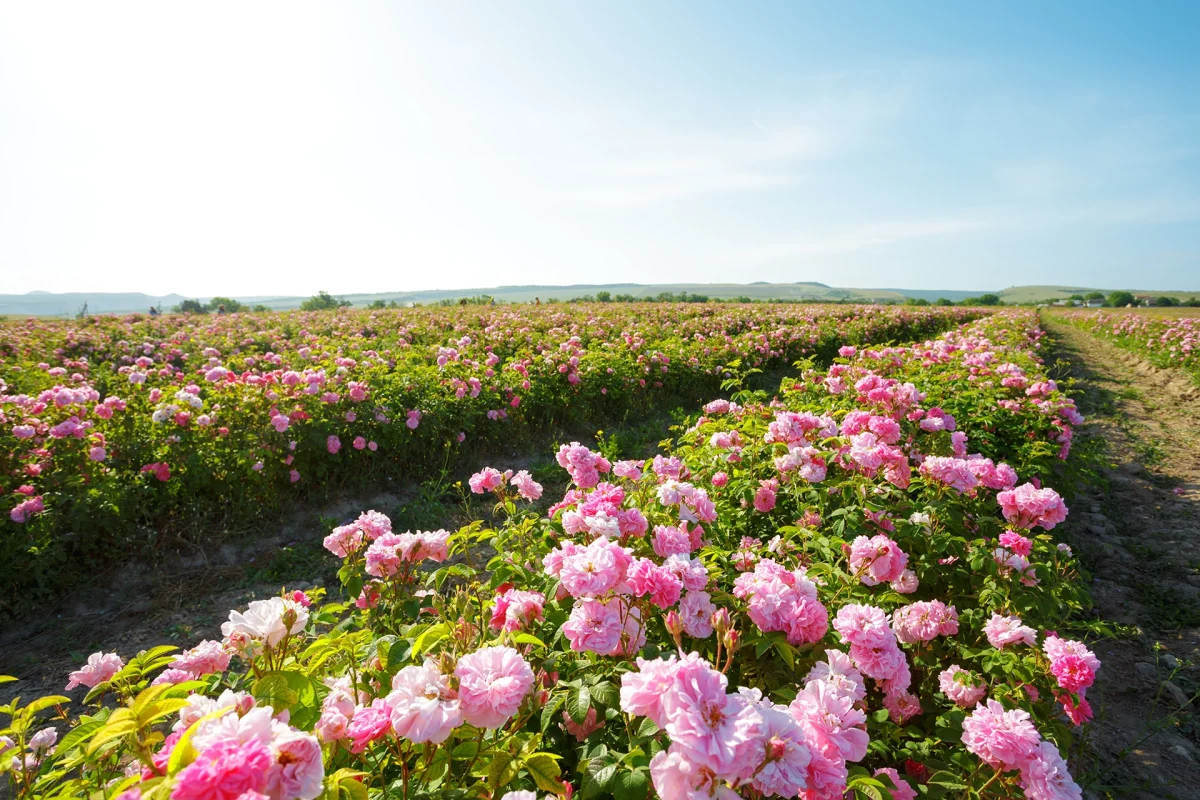
Rose oil is one of the most precious and complex scents in the world of perfumery, known as the “Heart Note” of the olfactory pyramid. This means it forms the main body of the fragrance, and other notes take shape around it. It is the layer that determines the character, elegance, and emotional tone of a perfume. Pure Rosa damascena essences create a romantic and sophisticated effect with floral, sweet, slightly green, and powdery nuances. By blending the vibrancy of top notes with the depth of base notes, it brings balance, softness, and emotional integrity to the perfume.
- Role in Perfume Composition
The fundamental “Scent Notes” of pure and natural rose oil (especially Rosa damascena– Isparta Rose) are as follows:
Main Scent Profile:
- Floral: A dominant, intense, rich, and deep rose scent.
- Sweetness: Contains a light, natural, and honey-like sweetness.
- Subtly Green: Possesses a fresh and slightly green nuance, reminiscent of the stems and leaves of fresh-cut roses.
- Mild Spice: Depending on the distillation method, subtle spicy undertones—sometimes peppery or clove-like—can be sensed.
- Powdery/Balsamic: As it dries down, it gains an elegant, slightly powdery, and lasting balsamic depth.
Position in Scent Notes:
- Middle Note (Heart Note): This is where it is most prominent. It gives the perfume its main character and begins to be felt after the top notes fade. It adds volume and richness to the fragrance.
Scent Components: The complex structure of rose oil stems from many chemical components that make up the scent. Some of these include:
- Citronellol & Geraniol: The primary components that give the scent its fresh, classic rose and lemony-rose character.
- Phenylethyl Alcohol:Defines the soft and sweet floral aspect of the rose scent.
- Damascone&Damascenone: Although present in very low quantities, they add fruity depth—sometimes leaning towards plum and raspberry—and a characteristic touch to the scent.
Insummary, rose oil possesses a unique and romantic scent with intense, rich, sweet, and slightly green-spicy nuances that form the heart of the perfume. Some perfumers also define it as a “bridge note.” That is, it ensures perfect harmony between top and base notes, offering a soft, balanced, and natural transition on the skin.
- Compatible Scent Groups
Rose oil (especially Rosadamascena) is extremely versatile and compatible in terms of scent profile. Its intense floral and sweet heart supports many other scent groups in both aromatherapy and perfumery, gaining depth with them.
The main scent groups and popular notes that harmonize with rose oil are as follows:
Other Floral Notes:
When combined with other flowers, rose creates classic and rich bouquets.
- Jasmine:Creates a luxurious and deep white floral bouquet.
- Ylang Ylang:Adds an exotic, creamy, and sweet dimension to the romance of the rose.
- Geranium/Rose Geranium:Provides a slightly minty and green rose nuance that naturally supports the rose scent.
- Lavender:Can balance the sweetness of the rose for a calming and clean effect.
- Neroli:Completes the richness of the rose with a fresh and slightly bitter-floral top note.
Citrus Notes
Used to add brightness and freshness to the sweet and rich character of the rose.
- Bergamot:Lightens the weight of the rose and offers a fresh, elegant opening.
- Lemon, Grapefruit, Sweet Orange: Ideal for invigorating and energetic blends. Highlights the citrus components (citronellol) of the rose.
Woody & Earthy Notes
Increases the longevity of the rose and provides a warm, dry, and sophisticated base (base note).
- Sandalwood:Creates a creamy, warm, and mystical foundation; its combination with rose gives a classic oriental touch.
- Patchouli:Adds depth and longevity with its earthy, sweet, and slightly damp structure, creating “floral-chypre” type scents.
- Cedarwood: Offers a dry, clean, and woody infrastructure.
- Vetiver:Provides a smoky, earthy, and rooty depth.
Spicy & Resinous Notes
Emphasizes the intensity of the rose and adds a warm, mysterious air.
- Frankincense & Myrrh: Add a meditative, balsamic, and resinous depth.
- Clove & Cinnamon: Strengthen the natural spicy nuances of the rose and give heat to the scent.
- Vanilla: Enriches the romantic and sweet aspect of the rose and increases longevity.
Other Notes
- Musk: Found as a base note in almost all rose scents; provides clean, sensual, and soft longevity.
- Red Fruits (Raspberry, Lychee): Frequently combined with rose in modern perfumery to give the rose a bright, juicy, and youthful character.
In summary, rose oil can harmonize with almost all fresh, woody, spicy, fruity, or other floral groups, serving as a bridge in scent compositions.
- Technical Specifications and Concentration
Since rose oil is a verypotentessence in perfume production, it is used in low ratios:
- LuxuryPerfumes: Between 0.2% – 2%.
- NichePerfumes: Can go up to 3%.
Also, special mixtures called “Rose Accords” are created—these balance natural rose oil with synthetic analogs (e.g., Phenylethyl alcohol or Geraniol).
- Emotional and Psychological Impact
Rose scent is effective not only aesthetically but also psychologically. Clinical studies have shown that the rose note:
- Reducesstress,
- Balances heart rhythm,
- Creates a sense of relaxation and confidence.
Therefore, perfumers prefer the rose note, especially in women’s perfumes, to create a feeling of “emotional balance and self-confidence.”
- Usage Areas in the Perfume Industry
Rose oil is widely used not only in classic floral perfumes but also in:
- Niche (Artisan) Perfumes,
- Aromatherapeutic Perfumes,
- Natural Cosmetic Lines,
- Body Sprays and Luxury Soaps.
In conclusion, Rose oil is known as the “Queen” of the perfume world. Every drop carries the essence of thousands of roses, the elegance of nature, and the emotional depth of the human spirit. It imparts a luxurious, timeless, and balanced heart to the perfume composition. Pure rose oil is seen as a rare and precious raw material in the perfume industry; its production is difficult, which makes it an indispensable component of exclusive niche perfumes. Therefore, for professional perfumers, rose oil is not just a scent ingredient, but an art tool crafted through the senses.